mDuo13
Thoughts, Words, WorksSix Grand Archive Draft Tips to Know Before .asphodel/paradise

As I'm getting ready to head to Grand Archive Worlds in Singapore, there are a lot of things I'm looking forward to but definitely high on my list is drafting .asphodel/paradise (PRD) for the first time. I'm a huge fan of drafting in general and I'm very excited to see what lessons the Grand Archive devs have taken from their past draft formats. With .asphodel/paradise cases (with included draft packs!) hitting stores in less than two weeks, it seemed like a great time to share a few tips I've picked up so you can take your Grand Archive drafting to the next level.
Background
.asphodel/paradise will be the third Grand Archive set that's designed to be draftable, or fourth if you count Mortal Ambition (AMB) 1st Edition and Alter Edition separately (I don't, although there are some minor differences in the drafting experience). I've drafted all of them and a host of homebrew formats and variants too. I won't focus much on Dawn of Ashes draft, which was fun but definitely clunky, although it is the reason we have the lineage break mechanic and consequently the popular champions Merlin and Tristan. With a combined match record of 12-2-1 in my last five drafts, I feel like I've got a good feel for what makes a successful draft, even though the Mortal Ambition draft format continues to surprise me with new deck builds and way more depth than my first impression gave it credit for.
There's a lot we don't know yet about the PRD draft format, so I'll summarize what we do know first:
- It will use sealed draft packs similar to the ones from Mortal Ambition, but updated for .asphodel/paradise. This is a semi-randomized special booster pack containing champion and regalia cards to jump-start your material deck, and you open it first and keep all the cards in it (it's not drafted). We don't know for sure which or how many cards from AMBDP will return, but I'm guessing that Nameless Champions will be back along with several of the regalia from those packs.
- The draft will involve 4 boosters, each containing 12 cards but you set aside the first card (the token/pantheon slot), so you end up with a draft pool of 44 cards plus whatever is in your draft pack. Compare with Mortal Ambition draft where you drafted 3 packs of 15 cards (but some boosters had basic spirits that were redundant with your draft pack).
- Deck construction will follow the same rules as AMB draft, with a 10-card (maximum) material deck, 30-card (minimum) main deck, and playset restrictions just like Standard.
Aside: I like that the 4-pack structure means you're passing left just as often as you're passing right; one of the weaknesses of drafts in general is that sitting downstream of a less experienced player gives you more opportunities to pick up the most powerful cards in the format. That's still true, but at least the bounty is evenly split among players on either side. It also reduces the dynamic where you'll be tempted to pivot in pack 2 because the signals you're getting about which card types are being cut off are different than pack 1, only for that to be a trap because the last pack will be back to where you started.
Since we haven't seen definitively any of the cards that will be in the PRD draft packs, and there are a lot of commons and uncommons from the actual set that haven't been revealed yet, there are a lot of open questions about what the draft format will look like. Those will be answered in just a few days when the PRD world premiere happens at Grand Archive Worlds in Singapore, but even before then there are some lessons for draft that I suspect will transfer over to the PRD format.
One thing I won't be discussing is money-drafting, which is picking the card that's worth the highest dollar amount regardless of its usefulness in your draft deck. Especially if you're drafting PRD for the first time, you may be excited to grab an SR or UR for your collection even if it has absolutely no chance of making it into your draft deck. That's fine, and in the grand scheme of things some GA cards are definitely worth way more than the prizing even for going undefeated in draft. But those decisions are personal, and the bread and butter of a draft format is the commons and uncommons that make up the bulk of the cards you'll pick from, so I'll be focusing mostly on the cards you're more likely to see.
Lesson 1: Advanced Elements Mostly Aren't Real
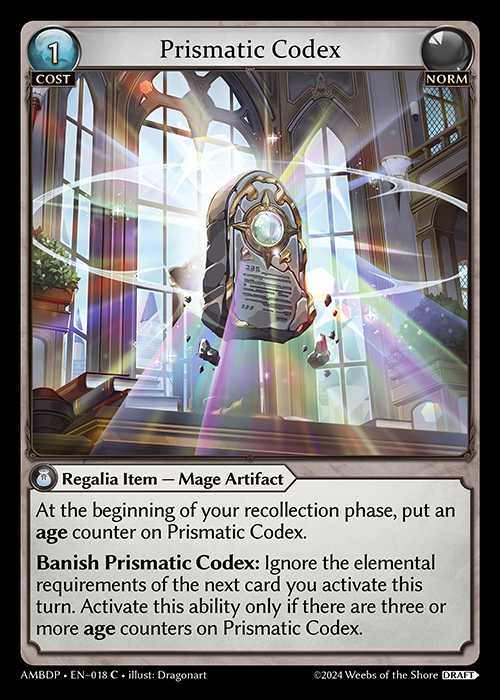
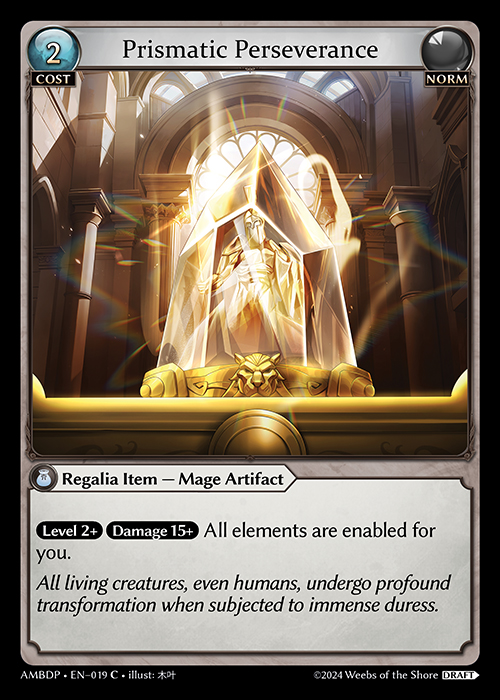
While advanced element cards are some of the most impactful and exciting cards to play in Grand Archive's Standard format, the same cannot be said for those cards in draft. Merely getting access to an advanced element in draft is pretty difficult, although this may vary based on the format. In Dawn of Ashes, you had to draft a complete champion lineage, which might not even appear in the draft pool; in AMB you were guaranteed to have a regalia in your draft pack that would allow you to play advanced elements, either Prismatic Perseverence or Prismatic Codex, but the cost of doing so is high enough that it's still usually not worthwhile. Prismatic Perseverance in particular is nigh-unplayable, between its 2 memory cost and the fact that most draft games end with you going from less than 15 damage to lethal in one turn so you never even have a slow activation window to use it.
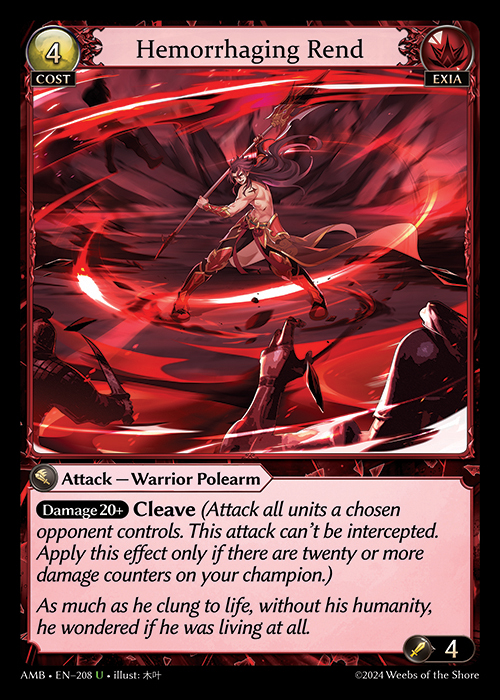
Many advanced element cards are very specific and they don't have nearly the same impact if you haven't built your entire gameplan around the mechanics they involve. For example, Hemorraging Rend is a powerful attack for Exia Jin decks but it depends on your champion having Damage 20+ to activate its Cleave effect; when you're on a Nameless Champion who only has 20 life in total, that's simply not happening.
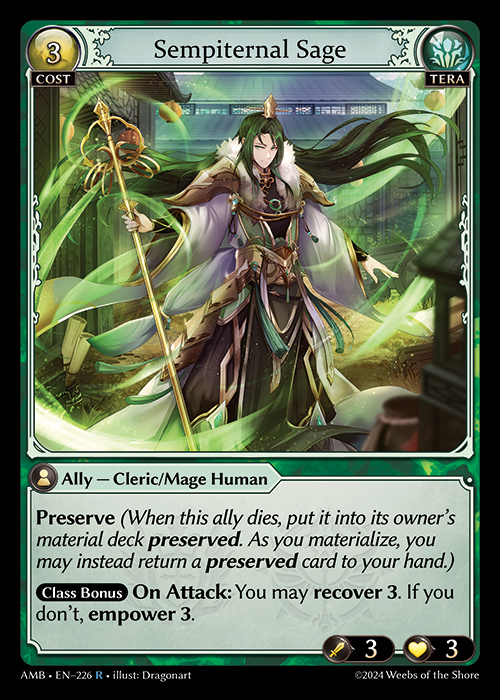
On the other hand, there are some exceptions. It turns out, Sempiternal Sage, a 3/3 who lets you heal or empower on every attack, is an absolute beater in draft format and well worth charging up your Prismatic Codex to get him onto the field.
I'll be looking carefully at .asphodel/paradise, both in terms of the types of advanced element cards that may appear and the tools that it gives for accessing advanced elements, to see if this changes, but I would say until proven otherwise you should not expect to play any advanced element cards you draft.
Lesson 2: Aggression is Strong and Defense is Premium
In Standard constructed, you have a carefully planned material deck with key defensive tools you might want in any game like Safeguard Amulet or Tariff Ring, and you'll typically also build your deck with key interaction pieces to answer threats, protect your own cards, and turn the tables on your opponent's best plays. But in draft, you're limited to whichever defensive tools appear in the booster packs, which are often a lot more restrictive. If you don't go out of your way to pick some allies with Taunt or Intercept, there's a good chance you'll get completely run over by aggressive decks.
Cards that are fragile to standard interaction can shine in draft where such interaction is a lot less common. Something like Fiery Swing where you likely go hands-down to attack for 6+ damage is usually a bad idea in Standard because your opponent almost certainly has an answer, whether it's a blocker, a negate, a damage prevention trick, or a way to end combat prematurely. In draft, it's way more likely that the attack will go through unimpeded and you're suddenly about a third of the way to winning the game.
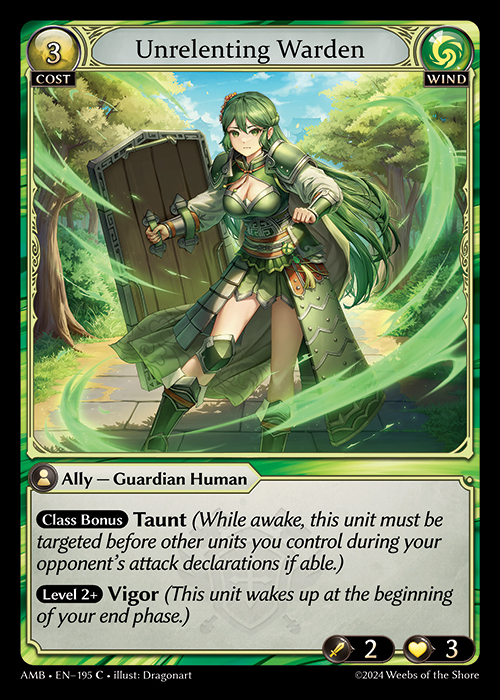
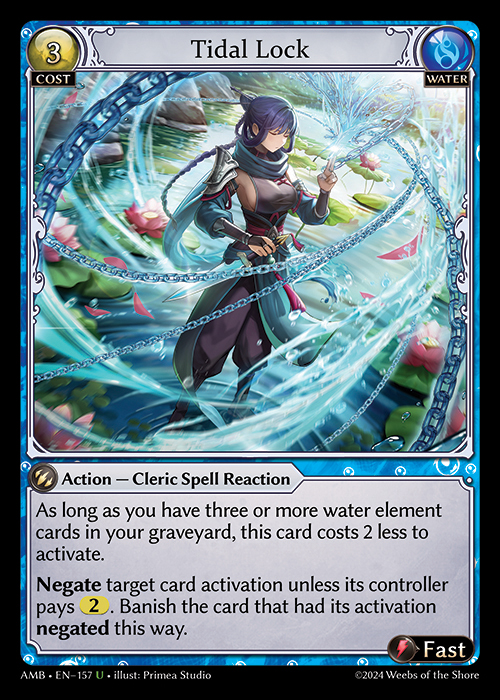
By the same token, defensive cards that you might not play in Standard can still be good picks in draft. Some examples of cards from AMB draft that you should prioritize more than you might expect include Unrelenting Warden, Palace Guard, Tidal Lock (in a mostly Norm deck), and Torpid Fractal. Cavalier Rescue can be an absolute blowout, Swerving Spring is solid, and even Arrow Trap (unprepared) is a bigger deal than you might think.
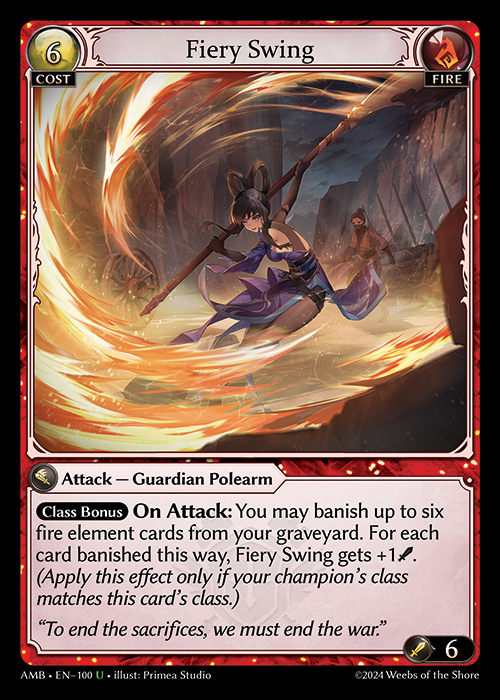
Looking at PRD draft specifically, I'm expecting VelTech cards that build up a single ally to be generally useful in draft because your opponent is far less likely to have an answer (like Dream Fairy) that blows up the whole thing. On the other hand, StrideTech W is available at Common, so maybe this type of "voltron" strategy will still be too fragile to be good. Another piece of interaction that has already been spotted in PRD demo decks is Nascent Blast, which was the most powerful card in all of AMB draft and could easily be a powerhouse again in the PRD format.

Lesson 3: Influence is Still Important
Ultimately, Grand Archive's fundamental resource system means that your influence (total cards in hand and memory) is your ability to play cards, and playing any card that doesn't replace itself means you're sacrificing a resource for the future. Consequently, anything that draws a card while doing something relevant, like Clean Cut, is huge in draft; reservable cards too, if they have any other effect you care about. Floating memory is a lot less good, though, because it's far less likely that you'll have memory costs you need to pay or a way to convert it back into usable influence.
In a Standard deck, you probably have two or more regalia like Backup Charger or Lost Providence whose main purpose is to draw you cards, but a typical draft deck will have at best one or two regalia like Veilara's Promise that are far more restrictive in how they let you draw a card. This means that a typical draft deck quickly drops to 5 or less influence, meaning you can probably only play 1 card per turn instead of 2.
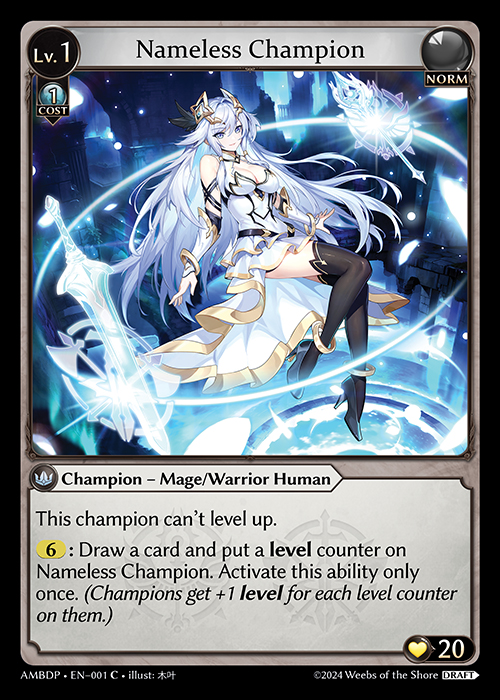
But, assuming Nameless Champions make a return in PRD draft, one very important card draw effect is right there in the ability that gives a level counter: it's often worth taking an off turn just to get the card draw from Nameless Champion while you still have enough influence to do so. That goes double in AMB draft, where there are a ton of powerful effects in Level 2+ restriction bubbles that you get access to along with the extra card. It remains to be seen how relevant the Level 2+ effect is with the PRD card pool, but getting back the influence you paid to level up is probably worth it regardless.
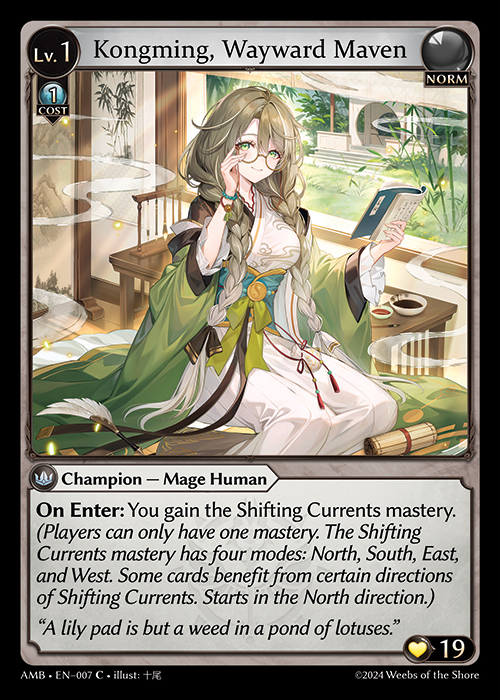
That's also a major reason drafting a named champion card is not usually worth it in AMB draft. It's almost unheard-of to find a complete lineage, and if you compare Nameless Champion (Mage/anything) to Kongming, Wayward Maven for example, you'll see that Nameless Champion consistently hits level 2 and draws you a card while Kongming has 1 less health and half as many classes, so you need to be getting incredible value out of her Shifting Currents to make her worthwhile. (Of course, if you found some amazing Mage-bonus cards and you didn't have a Nameless Champion with Mage class, it could be worth picking up Kongming just for that reason.) Looking at PRD draft, if Lorraine and Dante are in the pool, you might not even have a weapon you can materialize with Lorraine Lv1's on-enter, whereas Dante Lv1's free Elysian Test Subject might be good if you find some Aenean spells with relevant effects at Lv3.
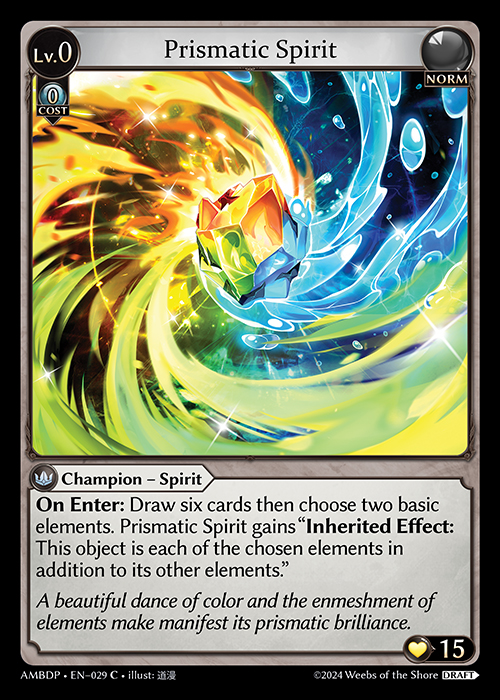
For similar reasons, being on Prismatic Spirit is usually a mistake; even if you have 2 or 3 literally unplayable cards in your deck, you can still use those to pay for cards you do want to play when you have the extra influence from a normal Spirit.
As an aside, it's generally better to go second in AMB draft. Being ahead on materializes typically matters less in draft, where your material deck rapidly runs out of useful cards, in comparison to the extra card draw from going 2nd. Unfortunately, since the official draft format is generally played as a best-of-1 match and the first player is chosen at random, you won't have much ability to use this knowledge to your advantage.
Openers to Draw with Nameless Champion
I'm going to take a bit of a detour to talk about how to structure your first turn to draw with Nameless Champion ASAP. This, of course, depends on having the right cards, so you should prioritize drafting those cards accordingly.
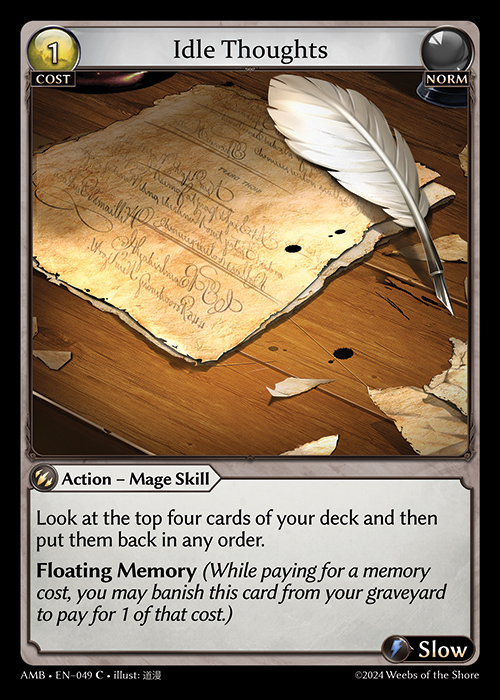
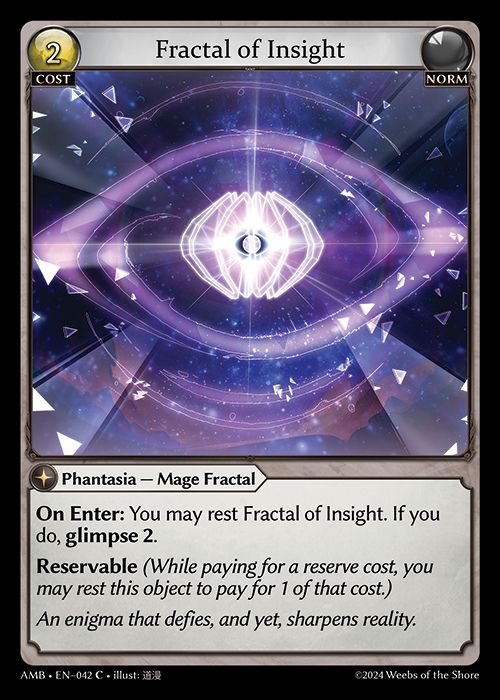
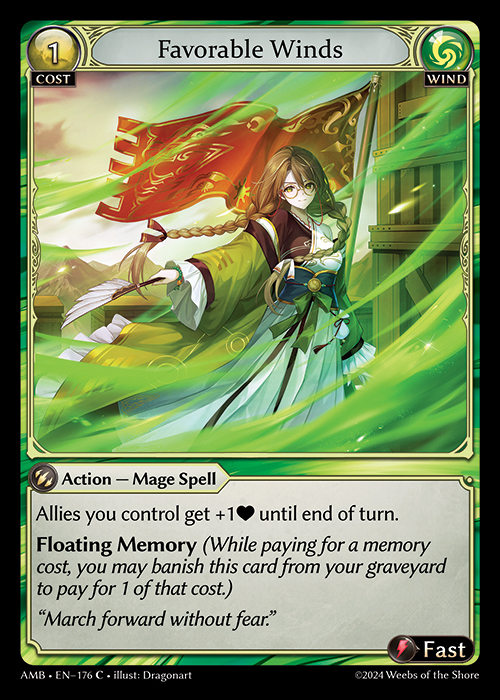
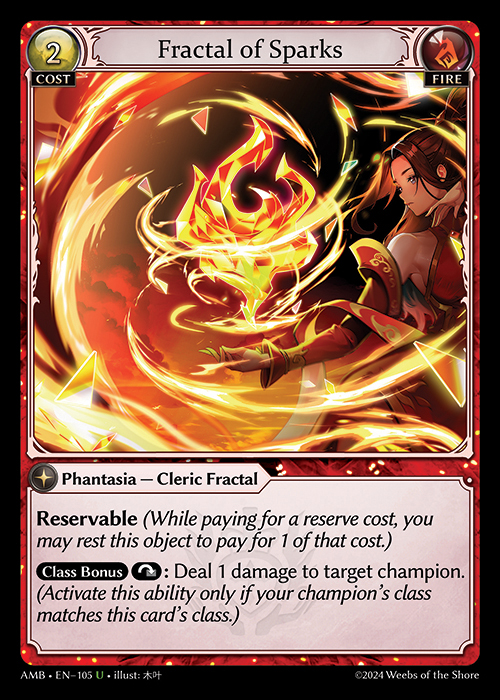
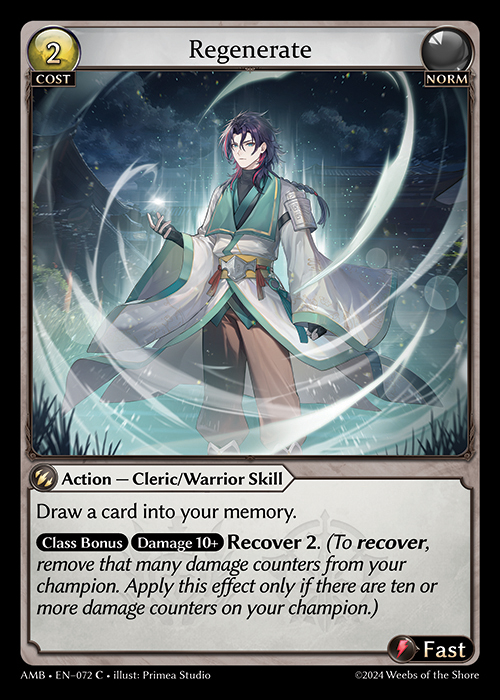
There are several ways to sequence your first turn or two so that you get to activate Nameless Champion's draw ability at fast speed, especially in pre-recollection right after materializing it. One of the most straightforward ways in AMB draft is to open with Idle Thoughts while going 2nd. Since you draw to 8 on your first turn, paying 1 for Idle Thoughts leaves you with exactly the 6 you need to use the Nameless Champion's ability in pre-recollection. Realistically, any card that costs 1 works the same way, although you'd like to have Floating Memory, as does any card that costs 2 and either draws a card to hand or is reservable: Fractal of Insight, Backstep, Deep Sea Fractal, and Clumsy Apprentice all do the job. An even better option is Fairy Whispers, which even works going first since it costs only 1 and replaces itself (assuming it doesn't whiff, which is a real concern in AMB draft where you likely have far more Norm cards than you'd use in constructed). Cards that draw into memory, like Mnemonic Charm and Regenerate, don't work for this purpose.
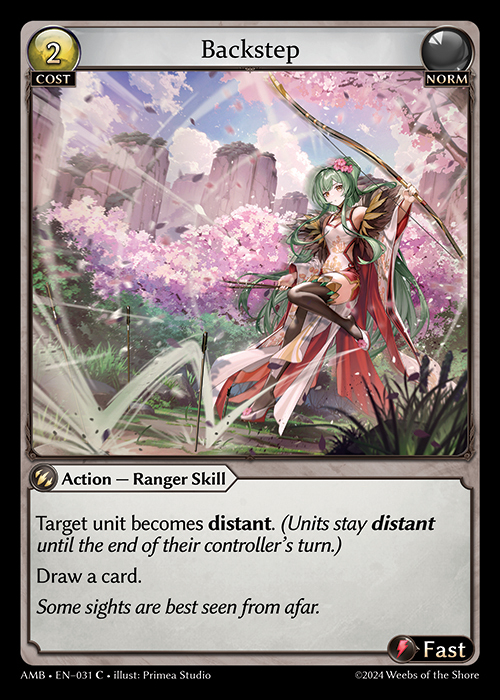
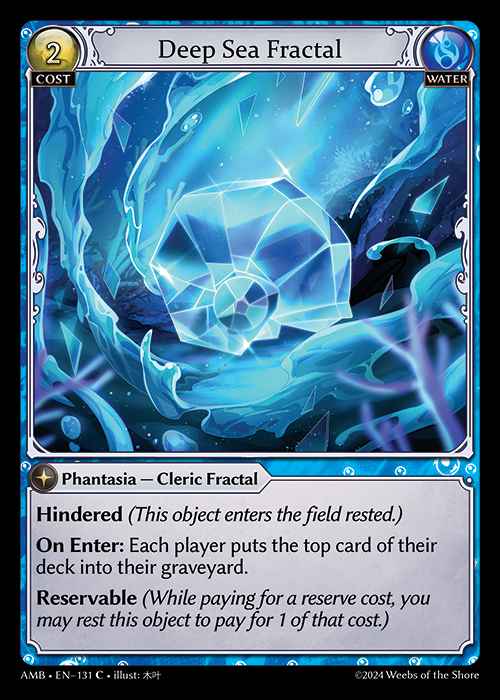
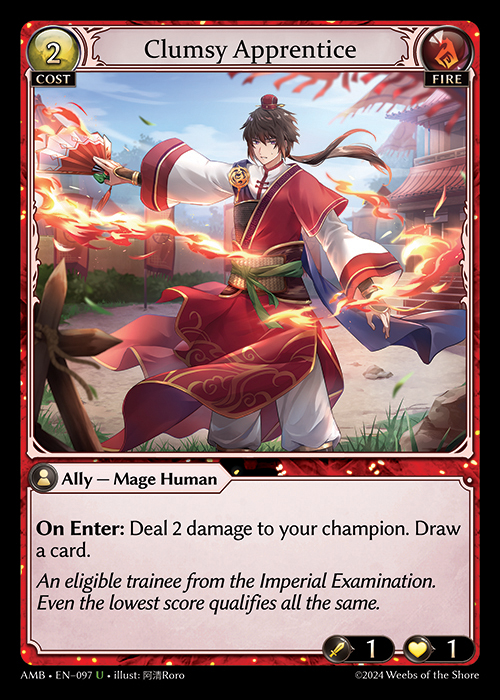
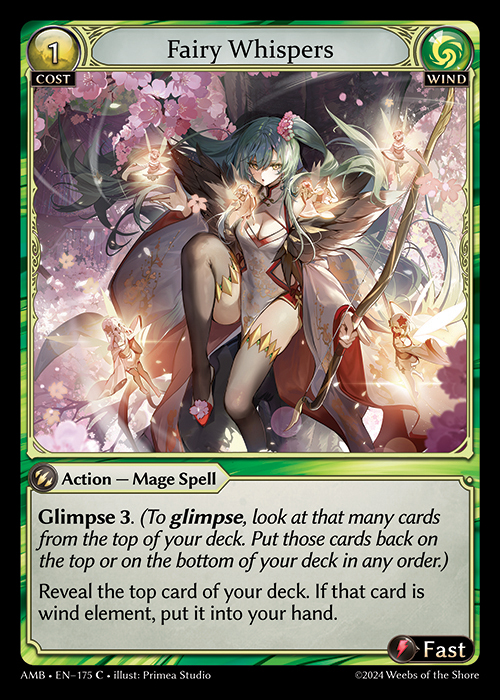
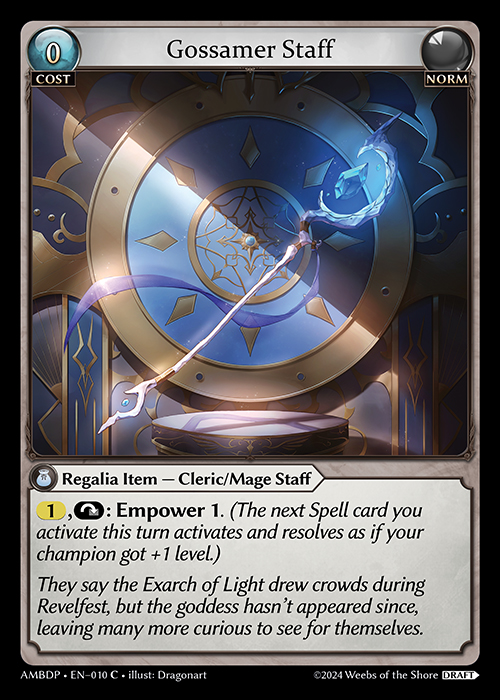
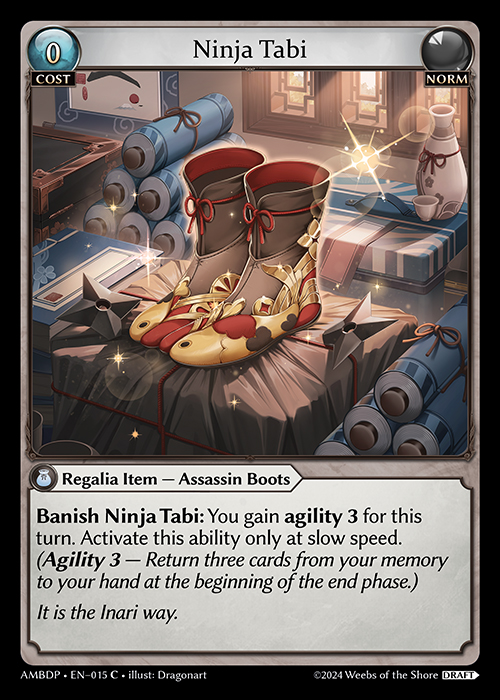
If you don't manage to use the level-up ability on your second turn pre-reco, there are still some other great ways to get there using your draft pack regalia. If you have Ninja Tabi you can use its Agility 3 effect to get back to 6 cards in hand after playing something. If you have Gossamer Staff and 7 cards in hand, you can use its activated ability to put 1 card into memory to pay for Lv1 without even playing a card, leaving you with exactly enough to activate the draw after materializing. Any activated ability with a reserve cost can be used in a similar way, so keep an eye out for regalia or turn 1 plays that might provide you a way to set that up on your second turn.
Lesson 4: Card Selection is Huge
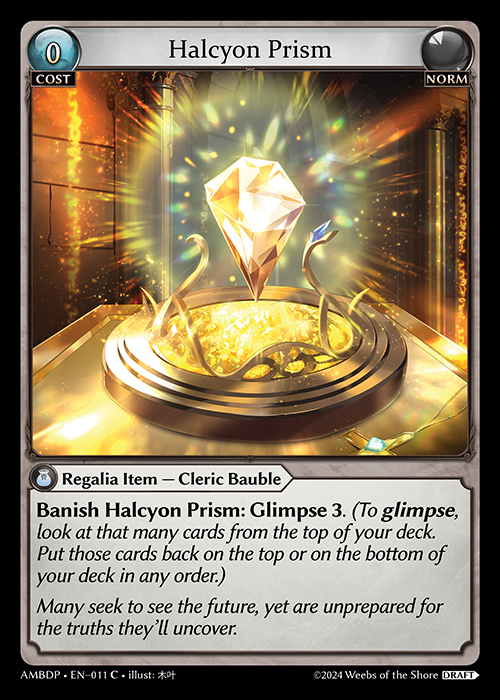
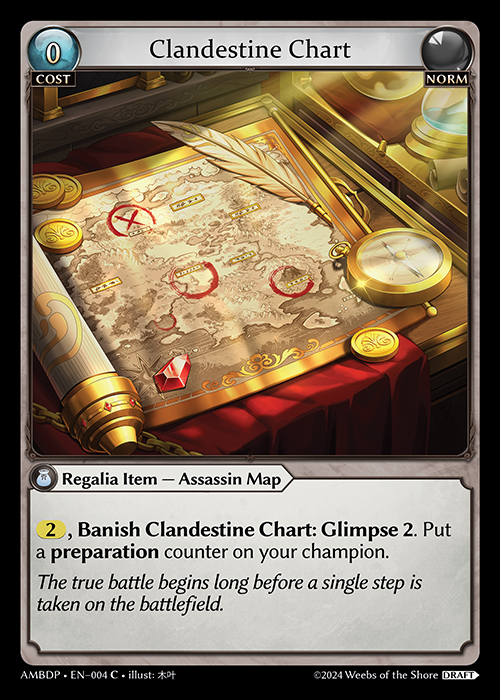
Draft decks are small at 30 cards, which means any effect that glimpses cards is, compared to Standard, doing approximately double the work in terms of the proportion of your deck it's filtering through. Additionally, in draft it's inevitable that some of the cards you're playing are the dregs you ended up with after everyone else took the good cards out of the booster pack. Being able to glimpse those to the bottom and more reliably find the good stuff is a big deal.
Even cards that just cheaply cycle, like Regenerate, are pretty good in draft because you only have to dig half as deep on average to get to the best card remaining in your deck. When drafting, if the choice is between a decent card that's an element you might not play and a card that's on-element but all it does is replace itself, the draw is probably more worthwhile as long as your deck has something else that you actually want to draw into.
Lesson 5: Don't Over-Focus on Class Bonus
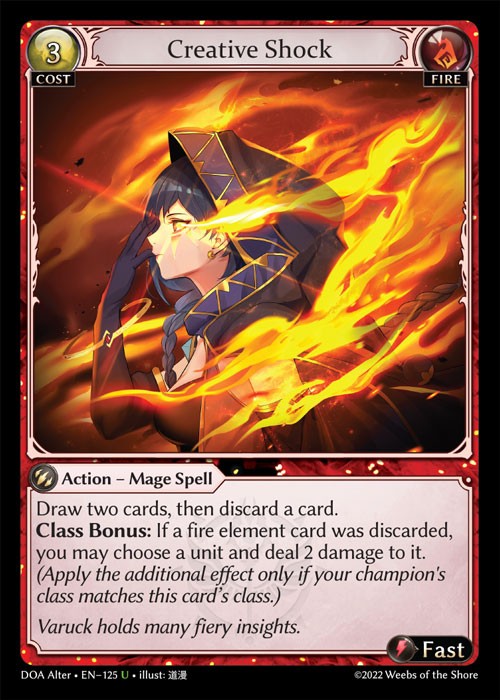
It's easy to look at a card in Grand Archive and think, "Well, if I don't have the class bonus on this card I'm not getting full value, so I probably shouldn't play it." Oftentimes that is true; cards are typically designed and costed so that you're getting below the expected rate of return if you don't have the class bonus (or champion bonus, or whatever). But even GA's Standard format has some notable examples of cards that have been all-stars in decks that have no hope of activating the class bonus: Creative Shock, Stifling Trap, Song of Frost, and Heated Vengeance are classic examples.
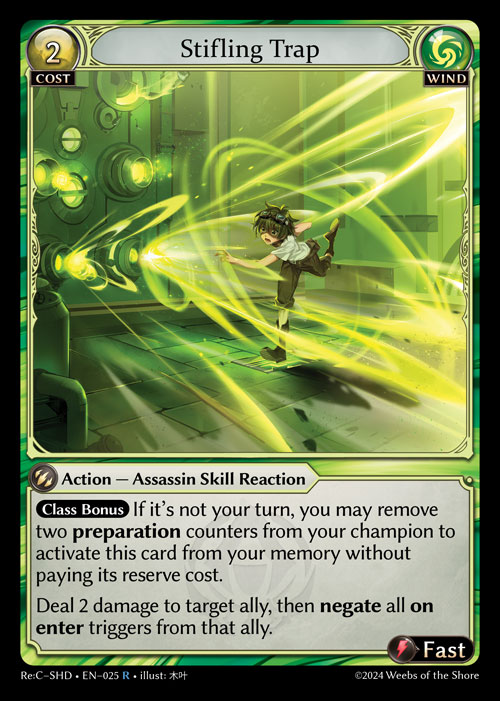
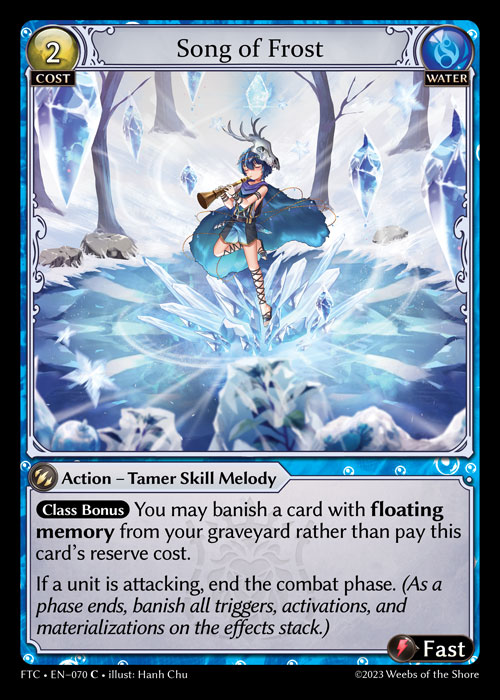
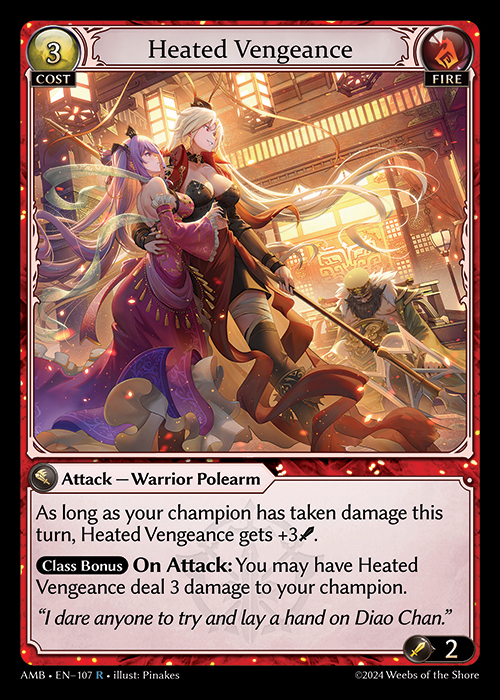
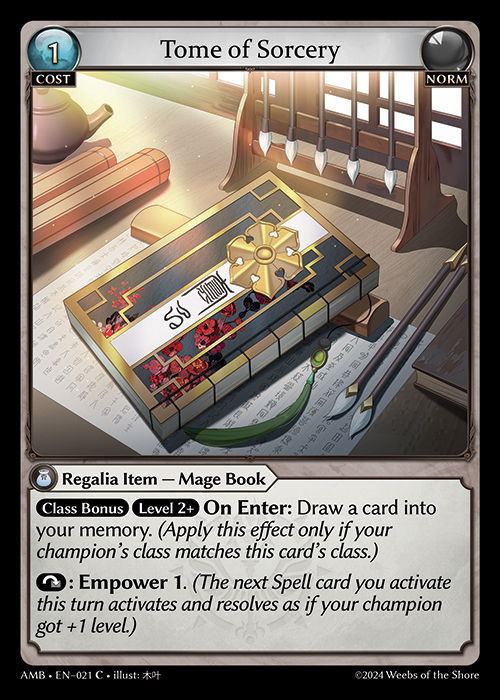
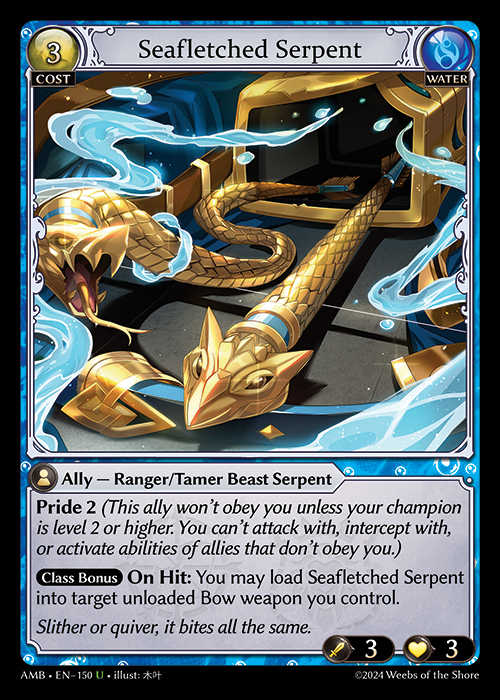
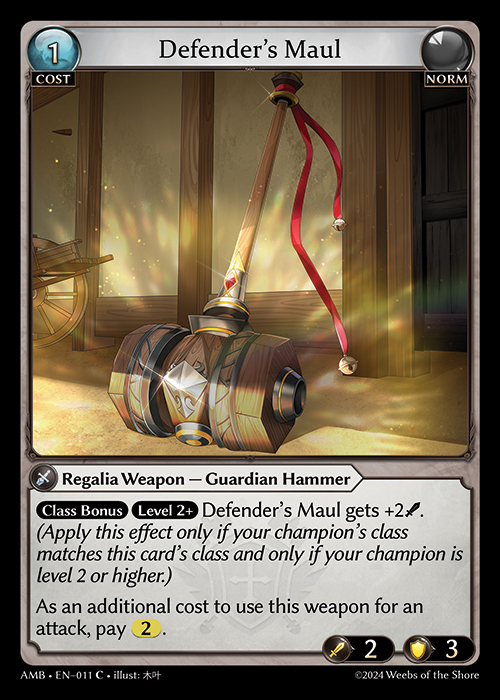
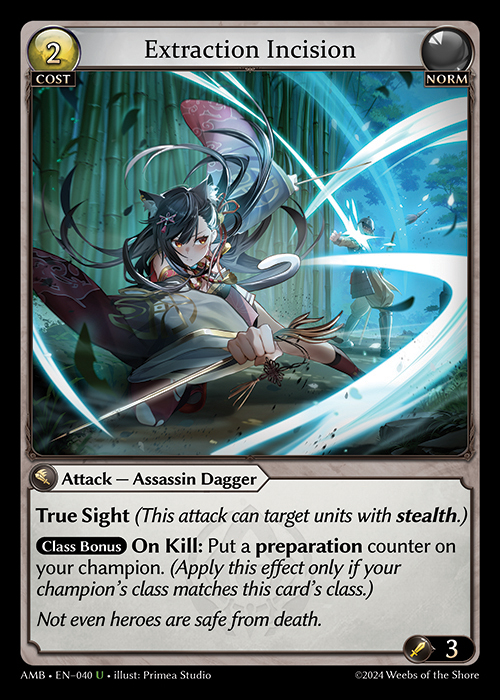
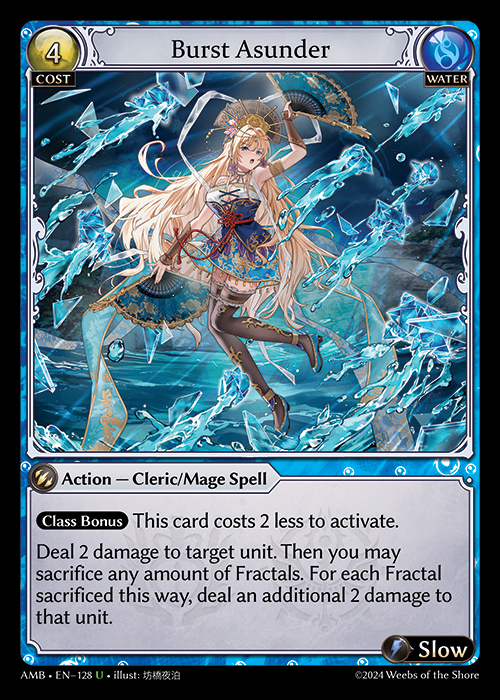
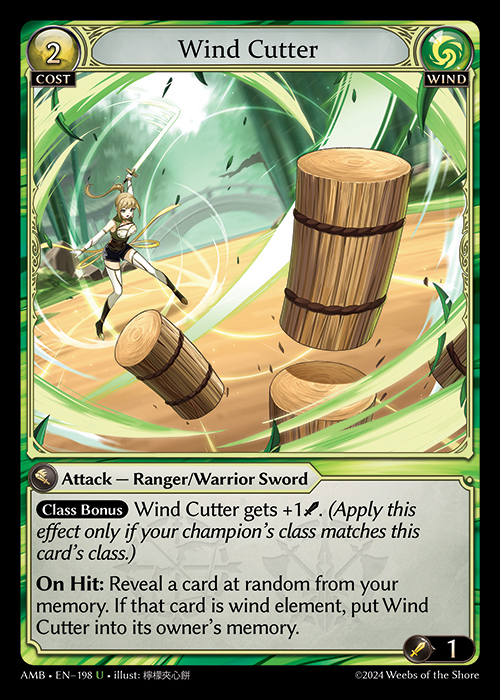
In draft, a lot of cards that you wouldn't expect to play without the class bonus are actually quite good. For example, anyone can run Tome of Sorcery to repeatedly empower a Nascent Blast; Wind decks with Razorgale can reuse Wind Cutter no matter their class; and Seafletched Serpent is just a 3-cost 3/3 as long as you're going to hit the pride requirement anyway (see above about using your Nameless Champion's draw-and-level ability). A weapon like Defender's Maul that's "only" 2 power and 3 durability without Guardian bonus can be huge for controlling the board, and Extraction Incision is helpful for removing 3 health or stealthy allies even without the Assassin bonus. (In fact, it's still a strict upgrade over Reckless Slash!) Something like Burst Asunder plus a few fractals can blow up your opponents no matter what champion you're on.
Lesson 6: Stats Matter More and Cost Matters Less
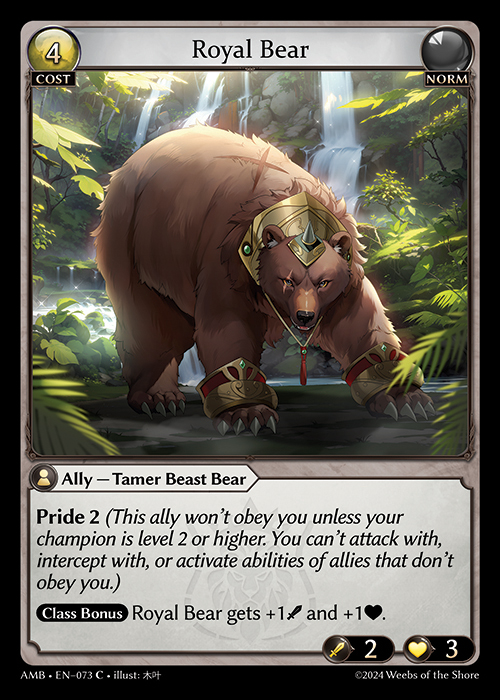
A Standard constructed deck should be a well-oiled machine, each card refined and working in unison with each other to get maximum value while pushing the tempo of the game in your favor. Draft decks are quite different: they're cobbled together out of spare parts in a rush, with pieces duct-taped into place not because they're the best fit for the job but because they're what you had on hand in the moment. All this means that the pace of draft often rewards "blunt instruments" that do more individually rather than cards that offer the best synergy and value per cost. Royal Bear is a card that is nearly unplayable in Standard; the fact that it costs 4 leaves you without enough cards to efficiently protect it or advance your gameplan in other ways like following up with a Backup Charger if you started with 7 cards. But in AMB draft, it's one of the most powerful cards there is, just because its statline of 3/4 (assuming you have Tamer class bonus) makes it large enough to beat most cards in a one-on-one, and if your opponent has to burn two cards to answer one of yours then you're coming out ahead. The difference between 3 cost and 4 cost in Standard is huge because it so dramatically affects what else you can do in the same turn cycle, especially in the early game, but in draft you often can't use those excess resources efficiently so having the better statline matters more.
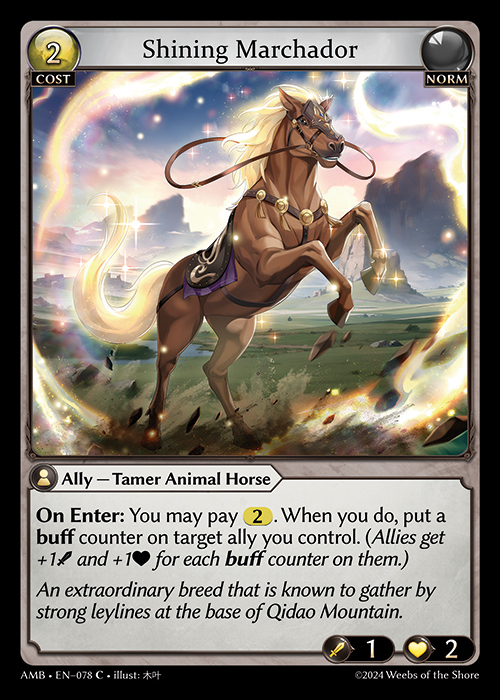
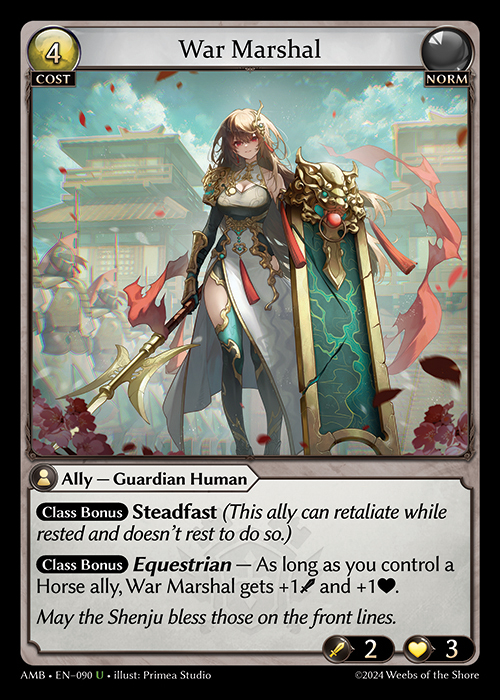
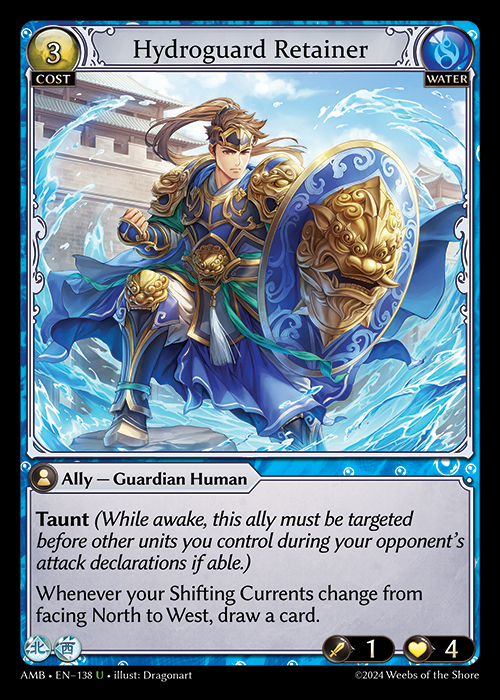
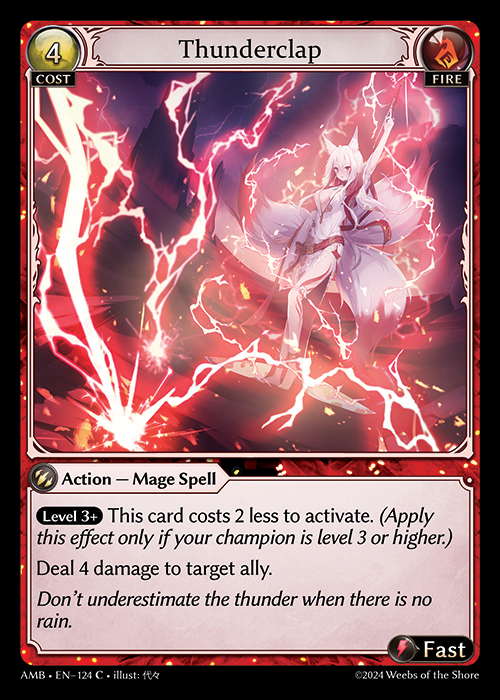
This lesson goes hand-in-hand with the one above about class bonuses. If an ally or attack card has good enough stats, it'll often be more impactful than a more cost-efficient card you could've picked instead, even if it has text on it that's inaccessible to you. For example, Hydroguard Retainer is still a dominant 1/4 taunter even without Shifting Currents, and Thunderclap trading 1-for-1 with almost any ally in the format is worthwhile even if you can't hit the Lv3+ discount. This is even more true for weapon cards because there's no way for your opponent to attack them directly, and your opponent may simply not have a way to remove them at all. Of course, weapons have diminishing returns because your champion can only wield one per turn, but it's still worth prioritizing at least one weapon card you can materialize for some extra damage.
Conclusion
Draft is a lot of fun and tests your skill in some different ways than constructed. It's also a lot more financially accessible, with all the players starting on an even footing for an entry price of only $20 (that's the cost of a Side Event ticket at an Ascent—pricing at your local game store will vary) compared with constructed where you can't expect to be competitive until you've invested at least several hundred dollars building a top-tier deck. I hope this article has whetted your appetite for .asphodel/paradise draft, and I hope to see you all at the draft tables, whether in Singapore or another event in the future!
User Comments
Nhora @2026-08-12 06:01:10
This was a good read, thank you for the article!
When I was playing the AMB draft, I always went by the rules of: always pick the draft pack bow, draft out the ranger allies as they're amazing even without ranger class bonus (plus you make the one who drafted a ranger champ less dangerous) and when in doubt about the basic element, just play water XD
Also the ability of the draft pack bow is not to be underestimated, especially if you use it to play draft in a different set like DTR, as you can make it have the Aetherwing or gun subtype while it's on the field.
I'm looking forward to the new set and the accompanying draft pack.
I hope this time they adjust the ratios a bit, as it always felt really bad when you didn't get a weapon and couldn't draft one.
MystCafeTCGs @2026-08-11 18:10:06
What a fantastic draft guide, read it all the way through. Draft is a favorite of mine in all TCGs, so much so that I won 4 GA draft events in a row over the past year or so. It's so mentally-stimulating and creative, and gives a home to many neglected cards.
Thanks for this!
Harunda @2026-08-10 18:26:00
TY GOAT… or should I say… Draft Demon ;^). After my first few drafts, I got hooked, so I’m looking forward to PRD! I’m guessing there will be a draft regalia that spits out a Power Cell (maybe not a +1 like Back Up Charger) given the overwhelming amount of automations and Power Cell support. Grey Lupinroid (2/1 that eats Power Cell to draw 1 to memory and gain a buff counter if you’re a Tamer) and Overcharged Droid (2/3 that becomes a 3/4 if you have 2 Power Cells) look like pretty strong allies, though they might be hard to see as former is a Rare and latter an Uncommon.
Add your thoughts...